
Athens Food Markets and Local Flavours
Central Market (Varvakios), Psyrri, Monastiraki, central Athens
A guide to the markets and food culture of Athens, from the Varvakios Central Market to neighbourhood street markets, spice shops and the everyday flavours that define the city's culinary identity.
Why we recommend it
Food markets are where a city reveals its everyday character. In Athens, they offer direct contact with the ingredients, rhythms and daily life that shape Greek cuisine, complementing restaurant experiences and deepening the visitor's understanding of local culture.
Highlights
- Varvakios Central Market - the heart of Athens food trade
- Neighbourhood laiki (street) markets on rotating days
- Spice merchants and herb shops of Psyrri and Monastiraki
- Fresh fish, meat, and seasonal produce
- Olives, cheeses, and traditional products
About this place
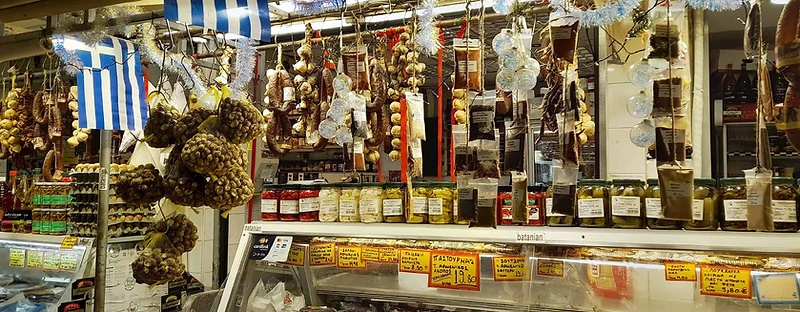
Athens' food markets are among the places where the city's culinary identity is most visible: the activity of the Central Market, the colours of a neighbourhood street market and the aromas of spice shops in Psyrri. For visitors interested in food as culture, these places offer an authentic window into daily life in Athens. The Varvakios Central Market, in the city centre, is the largest food market in Athens. Its meat, fish and produce areas offer an intense sensory experience. The surrounding streets are lined with spice merchants, cheese shops and stores selling traditional products. Neighbourhood street markets operate on specific days in different parts of the city, offering fresh produce, olives, bread and everyday household goods. These are active local markets that move with the rhythm of each neighbourhood. Psyrri and Monastiraki offer another side of the city's food culture, with long-established shops selling herbs, spices, nuts and traditional products alongside contemporary cafés and bars. Opening hours vary by day and season. This guide does not endorse specific commercial businesses by name unless they have been editorially reviewed and approved.
Practical information
Market opening hours vary by day and season and are not guaranteed in this guide. Laiki markets operate on specific days in different neighbourhoods. The Central Market is typically busiest in the morning. Wear comfortable, closed shoes. Be prepared for a lively, crowded, and intense sensory environment. The central food market is a working meat and fish market. Some areas may be unsuitable for young children or guests who are sensitive to strong sights, smells or wet market conditions.
Seasonality and weather: The Central Market is largely covered. Laiki markets are outdoors and operate in most weather. Summer can be hot and crowded - morning visits are recommended.
Safety notes: Markets are crowded - keep valuables secure. Watch for wet floors, especially in fish areas. Be aware of trolleys and hand carts. The environment can be intense - those sensitive to noise or crowds should plan shorter visits.
Accessibility: Markets are crowded, with wet floors in the fish and produce areas, and uneven surfaces. Wheelchair access is challenging but partially possible in the main aisles of the Central Market. Laiki markets are held on public streets with varying accessibility.
Need help planning?
Our concierge team can help coordinate transport, timing and tailored arrangements.
Ask the Concierge